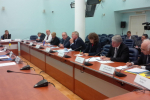
Chris Calls For More Joined-Up Working
Q146 Sir Christopher Chope: Graham, you and I were on the same panel at the Spectator security conference on Monday. One of the issues that came out of that seemed to be the lack of joined-up work between the Government and the security services and the operators in the North sea. We heard from Botan Osman, who was also on the panel. He is the CEO of Restrata and 65% of the North sea operations are his clients who he advises. It seemed from talking to him and what was said at the conference that we are in two separate silos. He is in the private sector advising private sector companies that are paying for his services, but he is unable to get access and individual clients of his are unable to get access to the same information that must be available to the security services. What do you think can be done to have more joined-up working on these issues?
Graham Skinner: We have a governance challenge in this space. While I have to recognise the excellent work of the Department, and particularly the state threats team, they are at times limited by resource, which can be a bit of a bottleneck. If we look at the ways that we could improve governance in this space, designating offshore energy installations as critical national infrastructure would be the easiest way to access existing UK governance for critical energy facilities.
We could also look to other neighbours. The centre-left Government in Norway is very positively behind its traditional energy industry and very supportive. They have a maritime security forum that brings the industry and the security services together directly without the arm’s length link between Government, which increases situational awareness right across the sector from fishermen right the way through to energy companies. The fishermen should not be underestimated in their importance. After all, they played a vital role in Ireland when the Russians were due to conduct war games in their territorial waters. I think we need to look at the maritime space as a whole and not break it down into individual silos.
Elisabeth Braw: I want to mention the example of Taiwan, which has had several incidents of suspicious cable damage. The first few times, or I should say the first many times, the cables were damaged and then it was documented by the coastguard and inevitably the ships that seemed to have caused the cuts had long left. Then Taiwan introduced new legislation that compels cable operators to immediately notify the Government in case of any suspicious variation in what their cables are transmitting. A few months ago, when the Taiwanese coastguard was inspecting a vessel that seemed to be behaving suspiciously, they wanted it to leave Taiwanese waters and while the coastguard was doing that, it received a notification from Chunghwa, which is the Taiwanese telecoms provider, saying a cable had been cut. The coastguard was able to intervene essentially at the crime scene because Chunghwa had notified the Government instantaneously, as instructed.
I think that sort of solution would be an option for the UK as well, including in the exclusive economic zone, where you can’t do very much as a coastal state but if the Government can be there or intervene immediately when a fault happens, they can try to convince the suspicious vessel to move into territorial waters and then you try to question the crew, which is better than not being able to do very much at all.
Q147 Sir Christopher Chope: Do you think this information sharing should be going both ways? It seems as though the Government and the security services often know more than some of the private operators and there is not enough information sharing.
Elisabeth Braw: Yes, a hotline should go both ways, and it should be a hotline with a designated recipient on both sides, but it is the case that the Government, with their intelligence services, know more than many operators do. I think that the realisation has also been slow among many private sector operators in different sectors that it is a changed world and that anybody can become the victim of geopolitically laid activity. It is not as if your company has to be controversial from the Russian perspective. It is just if your company happens to be a convenient target, you may become a target. It would be extremely helpful if there were to be an arrangement in which the Government were able to share information with the private sector and vice versa. I know, because I was involved in it, that a few years ago the Government wanted to set up such an exchange, but it didn’t go forward. In the six years since then, the need for it has only increased.
- ENDS